Jewelry photography is one of the most challenging areas of product imaging. No matter how carefully you shoot, your raw photos often don’t capture the true beauty of the piece. That’s where jewelry retouching comes in.
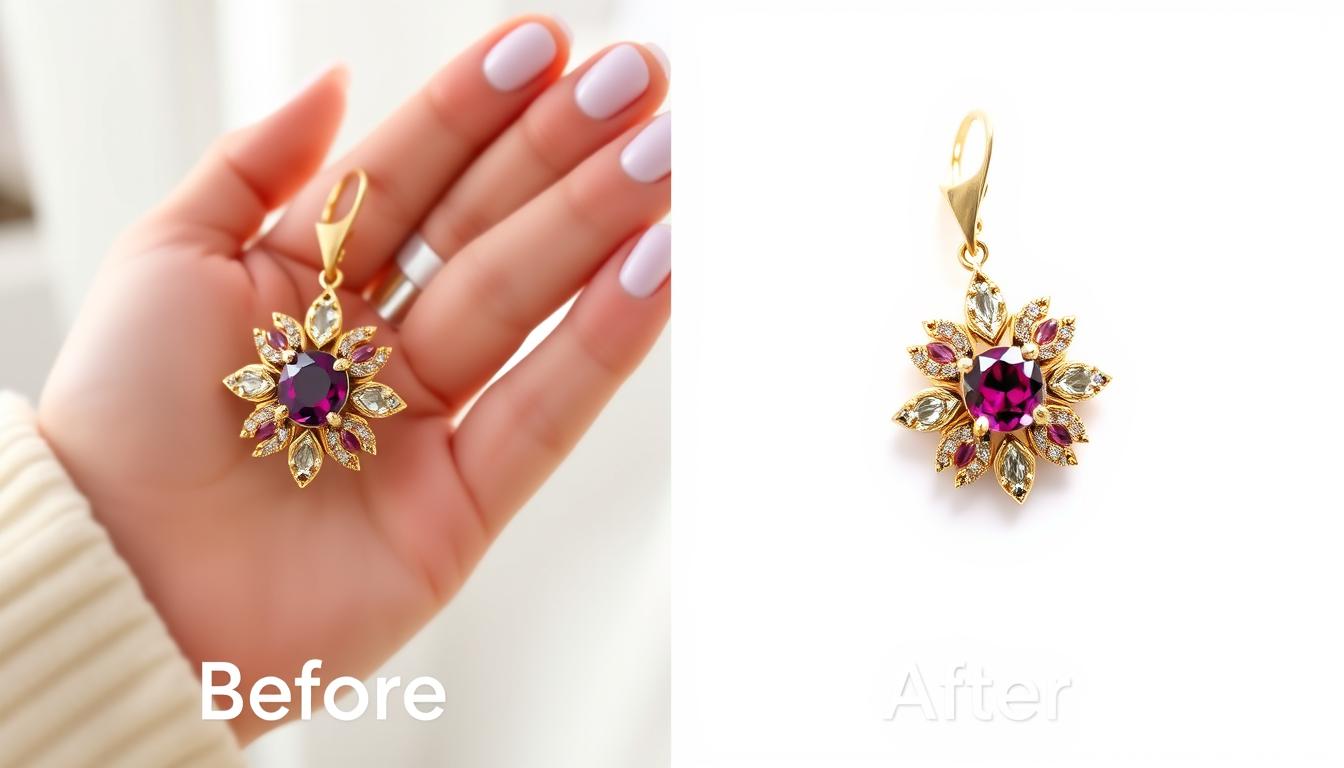
Jewelry retouching is the process of enhancing jewelry images to make them clean, polished, detailed, and visually appealing—while still keeping them realistic and true to the original product.
In today’s competitive online market, a well-retouched image can be the difference between someone scrolling past your product or stopping to explore it.
So, What Is Jewelry Retouching?
Jewelry retouching is a professional photo editing process that removes imperfections, enhances shine, improves gemstone clarity, corrects colors, and refines details to create high-quality, realistic jewelry images for e-commerce and marketing.
Why Jewelry Retouching Is So Important
Jewelry is small, reflective, and highly detailed. That combination makes it incredibly difficult to photograph perfectly.
Even with professional equipment, common issues include:
- Dust and micro-scratches showing up clearly
- Uneven lighting and harsh reflections
- Metals appearing dull instead of shiny
- Gemstones looking darker than they are in real life
These small flaws can significantly impact how customers perceive your product.
Think about it this way: if a high-end ring looks dull or unclear in a photo, it automatically feels less valuable—even if it’s not.
Jewelry retouching ensures your product looks premium, clean, and trustworthy.
What Does Jewelry Retouching Include?
Jewelry retouching is a detailed and multi-step process. Each step focuses on improving specific parts of the image.
1. Cleaning Imperfections
The first step is removing dust, scratches, and unwanted marks.
Because jewelry is often photographed in high resolution, even tiny particles become visible. Retouching removes these distractions to create a clean image.
2. Enhancing Metal Shine
Metals like gold, silver, and platinum need to look smooth and reflective—but not overdone.
Retouching adjusts:
- Brightness
- Contrast
- Highlights
This helps bring out a natural shine without making the image look artificial.
3. Improving Gemstone Appearance
Gemstones are the focal point of most jewelry pieces.
Retouching enhances:
- Clarity
- Color
- Sparkle
The goal is to make the stone look vibrant and eye-catching while maintaining realism.
4. Reflection Control
Jewelry naturally reflects light—and sometimes unwanted objects like cameras or surroundings.
Retouching helps:
- Reduce harsh reflections
- Keep soft, natural highlights
- Maintain balance in the image
5. Color Correction
Accurate color is essential in jewelry photography.
Customers expect the product they receive to match what they see online.
Retouching ensures:
- Gold looks like real gold
- Diamonds don’t appear gray
- Gemstones reflect their true color
6. Adding Depth and Shadow
Flat images don’t look appealing.
Adding subtle shadows and depth helps:
- Create a realistic feel
- Make the product stand out
- Improve overall visual balance
Jewelry Retouching vs Basic Photo Editing
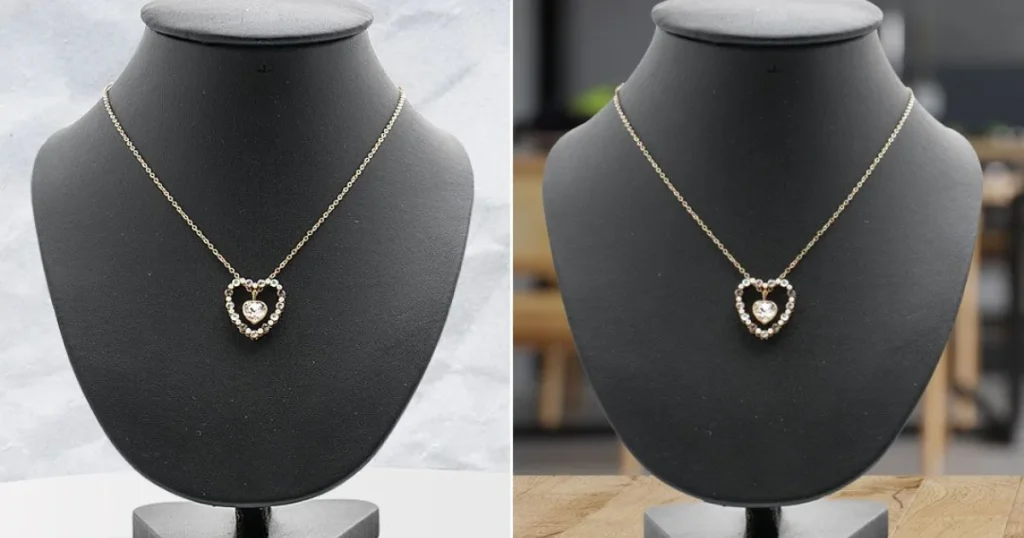
It’s important to understand that jewelry retouching is not the same as basic editing.
Basic editing includes:
- Background removal
- Simple brightness adjustments
- Cropping
Jewelry retouching, on the other hand, involves:
- Detailed cleaning
- Precision enhancement
- Advanced techniques
In short, basic editing improves the image, while retouching perfects it.
Common Problems Jewelry Retouching Solves
Jewelry retouching is designed to fix specific issues that commonly appear in raw images:
- Dust and dirt
- Surface scratches
- Dull metal finish
- Dark or lifeless gemstones
- Uneven lighting
- Distracting reflections
By solving these problems, the final image looks clean, sharp, and professional.
The Role of Jewelry Retouching in E-commerce
In online shopping, customers rely entirely on visuals.
They can’t touch or try the product. So your images must do all the work.
High-quality jewelry images:
- Build trust
- Increase perceived value
- Improve conversion rates
Low-quality images:
- Create doubt
- Reduce engagement
- Lead to lost sales
Investing in retouching is not just about appearance—it directly affects your revenue.
Does Jewelry Retouching Make Images Look Fake?
This is a common concern.
The answer is: only if it’s done incorrectly.
Professional retouching focuses on:
- Realistic enhancement
- Natural light balance
- Accurate colors
Over-editing, however, can:
- Make metals look unnatural
- Create unrealistic gemstone colors
- Reduce customer trust
The goal is always to enhance—not exaggerate.
How Professionals Do Jewelry Retouching
Professional retouchers use advanced techniques to achieve high-quality results.
Some of the most common techniques include:
- Frequency separation (for detailed cleaning)
- Dodge and burn (for light and shadow control)
- Layer masking (for precise adjustments)
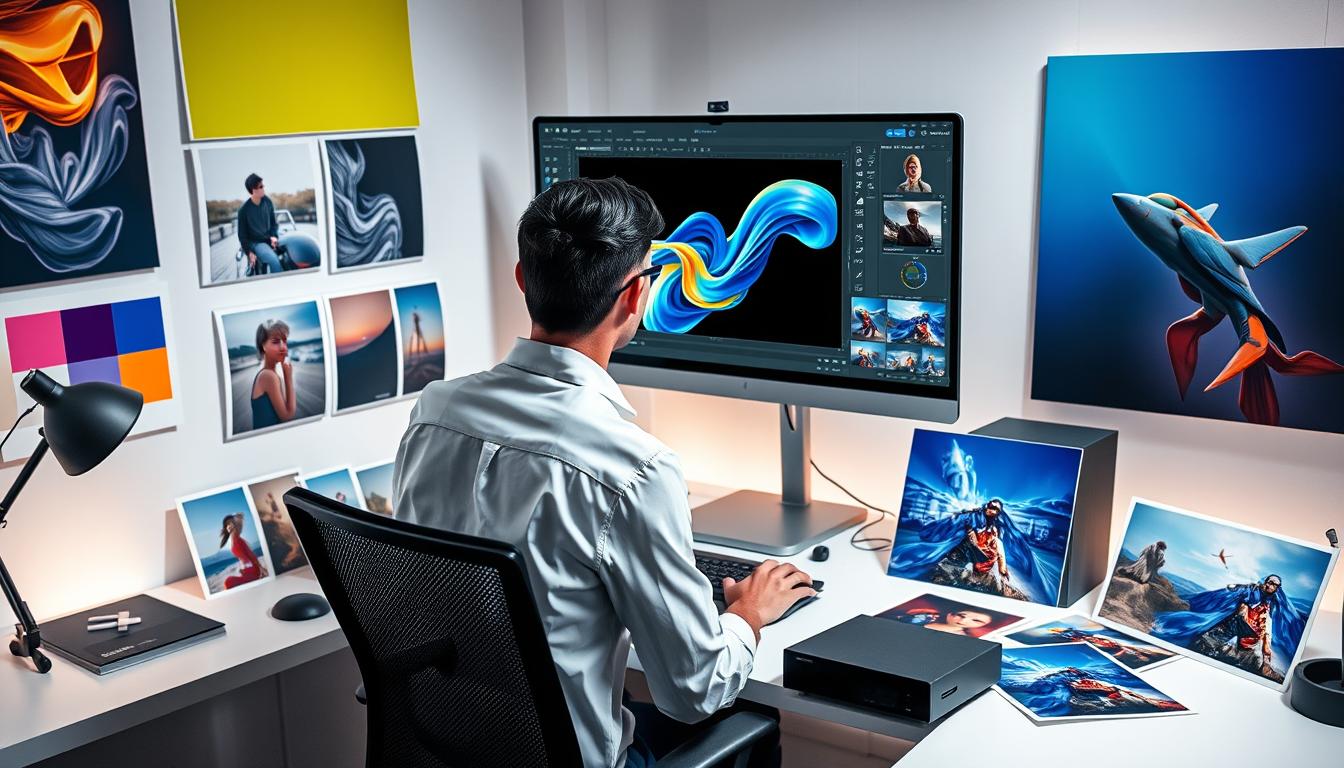
Most of this work is done using tools like Adobe Photoshop.
But tools alone are not enough—the real difference comes from experience and attention to detail.
How to Prepare Jewelry for Retouching
Retouching works best when the original photo is well-prepared.
Before shooting:
- Clean the jewelry thoroughly
- Use controlled lighting
- Avoid strong reflections
- Shoot in high resolution
Better input always leads to better output.
Who Needs Jewelry Retouching?
Jewelry retouching is useful for anyone working with jewelry images, including:
- E-commerce stores
- Jewelry brands
- Photographers
- Online sellers
If your business depends on visual presentation, retouching is essential.
How Jewelry Retouching Improves SEO
This is something many businesses overlook.
High-quality images can indirectly improve your website’s SEO.
Here’s how:
- Better images increase user engagement
- Visitors stay longer on your site
- Bounce rates decrease
- Product pages perform better
Search engines consider user behavior, so better visuals can support better rankings.
Mistakes to Avoid in Jewelry Retouching
Even though retouching is powerful, mistakes can reduce its effectiveness.
Over-editing
Too much shine or color can make images look fake.
Ignoring Details
Small imperfections can ruin an otherwise good image.
Poor Color Matching
If the product looks different in real life, customers may lose trust.
Inconsistent Editing
Different styles across images can make your brand look unprofessional.
Future of Jewelry Retouching
As e-commerce grows, the demand for high-quality visuals continues to increase.
Customers expect:
- Clear images
- Accurate representation
- Premium presentation
Jewelry retouching is becoming a standard—not a luxury.
FAQ
What is jewelry retouching in simple terms?
It is the process of improving jewelry photos by cleaning, enhancing, and refining them to look professional and realistic.
Why is jewelry retouching necessary?
Because raw images often contain flaws like dust, poor lighting, and dull colors that reduce image quality. Learn more why is jewelry retouching needed for images.
How long does jewelry retouching take?
It depends on the complexity. Simple edits take less time, while detailed retouching requires more precision and effort.
Can I do jewelry retouching myself?
Yes, but it requires skill and experience. Professional results usually come from trained retouchers.
Does retouching change the original product?
No. It only improves how the product is presented in images.
What is the biggest challenge in jewelry retouching?
Maintaining realism while enhancing details.
Final Thoughts
Jewelry retouching plays a critical role in how your products are presented online.
It transforms ordinary images into high-quality visuals that:
- Attract attention
- Build trust
- Increase sales
In a competitive market, where customers judge products based on images, retouching is not optional—it’s essential.