
Semantic Segmentation Services, Pixel by Pixel
Every pixel assigned a class, from road and water to teeth and crops, so your model understands the whole scene, not just where objects sit. Painted by our in-house team from your class map and checked against the original image before delivery.
Your own images, labeled free. NDA available on request.
- NDA on requestData used for your project only
- Two-stage reviewAnnotator, then reviewer
- Three shiftsWork moves around the clock
 Every pixel labeled
1 vegetation2 water0 unlabeled
one class ID per pixel · mask matches image size
Masks from real segmentation projects
Drag to compare the raw image with the delivered mask.
 BeforeAfter
Drag to compare
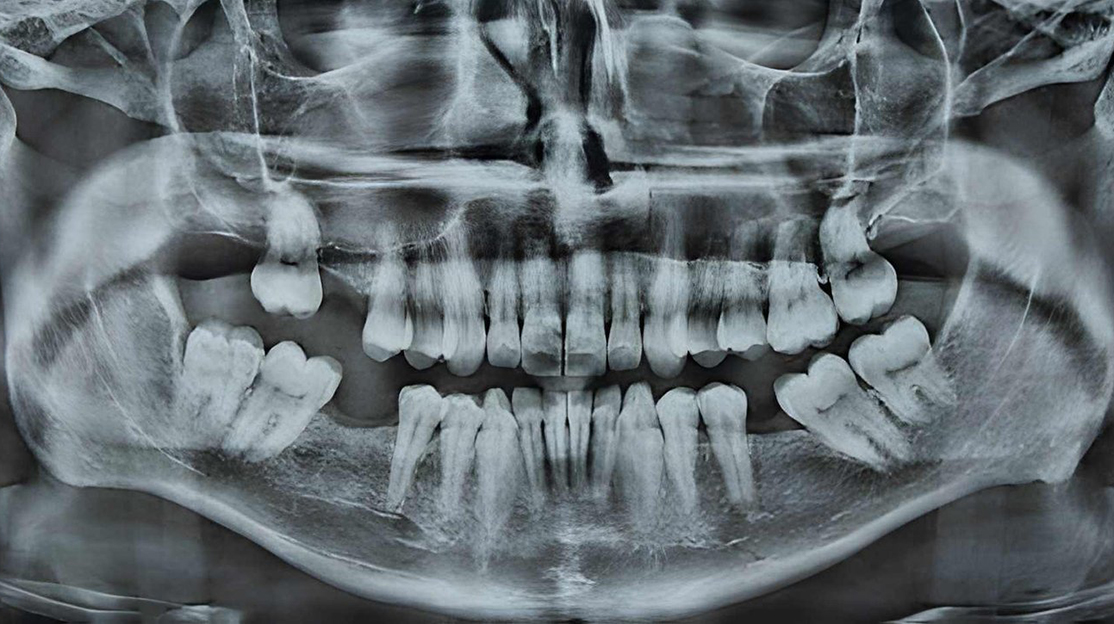
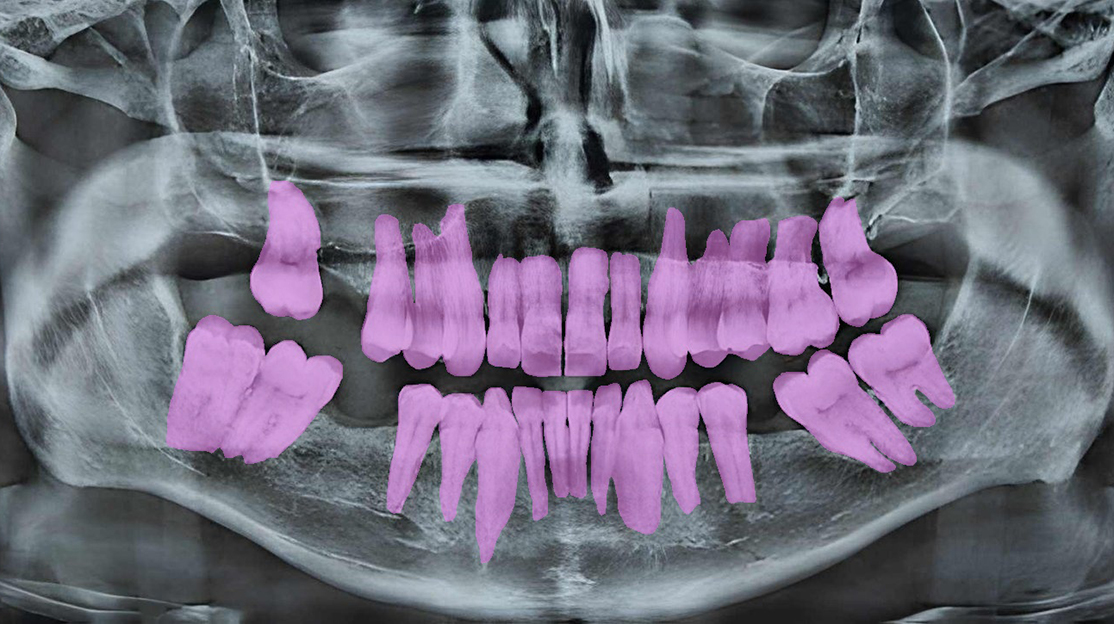
Teeth on a panoramic X-ray
Low contrast, overlapping roots and soft edges make dental X-rays one of the hardest segmentation jobs. Every visible tooth is masked from crown to root tip, and the bone around it stays unlabeled.
- Classes
tooth- Coverage
- Every visible tooth, crown to root
- Used for
- Dental AI, treatment planning, X-ray screening
Class map fixed before the first pixel
Two classes or forty, still images or long video clips, with your palette and ID table agreed up front.
Image segmentation
Pixel masks for single images, from simple two-class splits to dense street and medical scenes.
Video segmentation
Frame-by-frame masks that stay consistent over time, so classes do not flicker between frames.
Multi-class pixel labeling
Long class lists on one fixed palette and ID table, consistent across every annotator and batch.
AI pre-label correction
Send model-generated masks and we fix bleeding edges, holes and wrong classes.
Every pixel on the right class
A segmentation model copies its training masks pixel for pixel, mistakes included. Fixed rules for every annotator, a reviewer on every batch, and your data kept under control throughout.
No pixel left unlabeled
Every pixel gets a class or your agreed ignore label. No stray gaps or holes inside masks.
Clean class boundaries
Edges are painted at full zoom, without halos or bleed into the neighboring class.
One color, one class
A fixed palette and ID table, so a car is the same value in image 1 and image 50,000.
Overlay review
A reviewer checks each mask over the original image and sends back anything that does not line up.
How we handle your data
- NDA available on request
- Access limited to the people on your project
- No personal devices. Files stay on company systems
- Deleted after delivery when you ask
Pilot first. Commit after.
No contract or payment until you have seen your own images labeled and approved the quote.
- STEP 01
Share samples and rules
A sample link, your class list and color map, or just what the model needs to understand.
- STEP 02
Free pilot batch
We label it in your mask format and note every edge and ignore-label decision.
- STEP 03
Fixed quote and schedule
A per-image price and batch plan based on your real images, not a guess.
- STEP 04
Batches on schedule
Reviewed files with progress updates from one project manager.
Built for one-off datasets and ongoing pipelines
Team size is planned around your volume and deadline. Large datasets ship in batches so training can start while labeling continues.
Project
A fixed dataset with a deadline. Scoped, labeled and delivered in batches.
Ongoing stream
New data arrives daily or weekly and comes back labeled on a set turnaround.
Dedicated team
Annotators trained on your guidelines and kept on your work, across three shifts.
Used by teams in automotive, smart cities, agriculture, healthcare and dental, aerial and satellite imaging, and manufacturing.
Is segmentation the right label?
Semantic segmentation gives every pixel in an image a class, so the model learns what the whole scene is made of, including background like road, sky, water or healthy tissue. Models such as U-Net, DeepLab and SegFormer train on these masks.
If you only need to find and count objects, boxes or polygons are faster. Need each object separated as well? We also deliver instance and panoptic masks. Not sure? We’ll recommend one on the pilot.
| Label type | Best for | Detail | Link |
|---|---|---|---|
| Bounding box | Detection, counting, tracking | Rectangle | View |
| Polygon | Irregular shapes, products, rooftops | Follows the outline | View |
| Semantic segmentation THIS PAGE | Scene understanding, aerial, medical | Every pixel | |
| Pre-label correction | Large sets with model labels to fix | Same as final type | View |
Before you send data
What AI teams ask us most before a pilot.
We are happy to sign an NDA on request. Access is limited to the people on your project, files stay off personal devices, and we delete your data after delivery when you ask.
Semantic segmentation gives every pixel a class, so two touching cars become one car region. Instance segmentation also separates objects of the same class, so each car gets its own ID. We deliver either one, or panoptic masks that combine both.
Use segmentation when your model needs to understand the whole scene, including background classes like road, sky, water or healthy tissue, or when edge accuracy matters at pixel level. For finding and counting objects, boxes or polygons are faster and cheaper.
Yes. Send your class definitions, IDs or colors and any ignore labels. We confirm the edge rules on the free pilot and then apply the same class map to every image.
Yes. We label every frame, or keyframes at an interval you choose, and check that classes stay consistent from frame to frame so masks do not flicker.
It is priced per image. The rate depends on the number of classes, how complex the scenes are and how strict the edge rules are. We send a firm quote after the free pilot, before any work is billed.
Start with a free pilot on your own data
Send a sample link and your class list. You get back:
- Labeled samples in your mask format
- Notes on every edge-case decision
- A fixed per-image quote and delivery plan
Rather talk first? Email info@graphicsartssolution.com. We usually reply within 24 hours.
No payment details. NDA available on request.