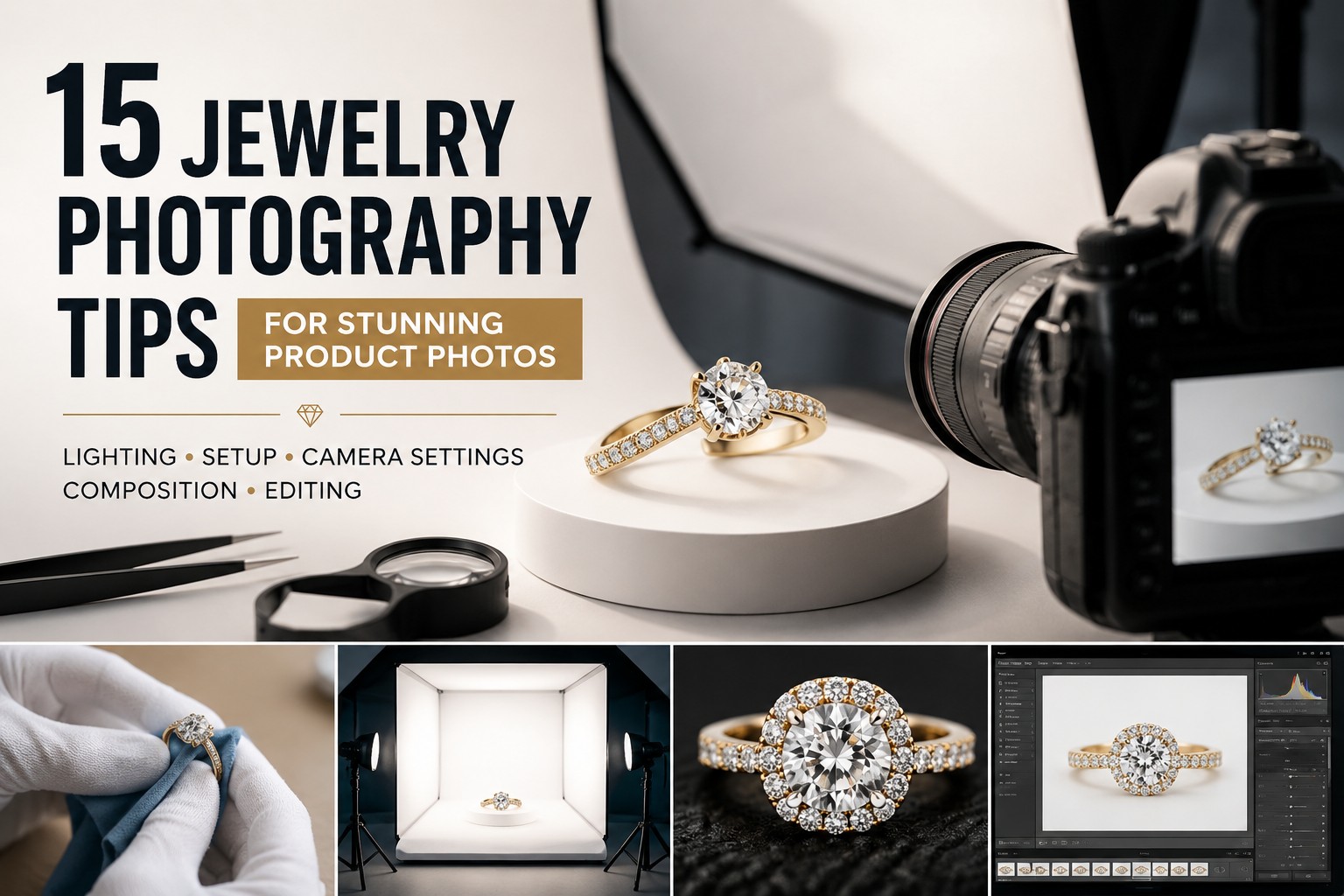
Looking for jewelry photography tips that actually help you take better product photos?
Jewelry can be difficult to photograph. A ring that looks beautiful in person may appear dull in a photo. Dust, fingerprints, reflections, and poor lighting can hide the details that make a piece special.
Whether you’re taking photos for an online store, social media, Etsy, or Amazon, image quality matters. Customers can’t hold the product in their hands, so they rely on photos to judge its quality, craftsmanship, and appearance.
The good news is that better jewelry photos don’t always require expensive equipment. In many cases, small changes to your lighting, camera settings, background, and editing process can produce noticeably better results.
In this guide, we’ll share practical jewelry photography tips that professional photographers and jewelry brands use to create clean, accurate, and professional product images.
Common Jewelry Photography Mistakes to Avoid
Even experienced photographers can make mistakes that reduce image quality. One of the most common mistakes is using direct light, which creates harsh reflections on metal surfaces and gemstones. Another frequent issue is photographing jewelry without cleaning it first. Tiny fingerprints and dust particles become highly visible in close-up images.
Many beginners also rely on automatic camera settings. While convenient, automatic modes often struggle to expose reflective products correctly. Using manual settings and a tripod usually produces much better results.
Finally, avoid excessive editing. Customers expect the jewelry they receive to match the product photos. Over-retouching can lead to unrealistic images and disappointed buyers.
1. Clean the Jewelry Before Every Shoot
One of the biggest mistakes in jewelry photography is photographing dirty jewelry.
Dust, fingerprints, smudges, and tiny scratches become highly visible when viewed through a camera lens, especially during close-up shots.
Before placing any piece in front of the camera:
- Use a microfiber cloth
- Wear cotton gloves if possible
- Inspect the jewelry under bright light
- Remove fingerprints and dust particles
Spending two minutes cleaning the item can save hours of editing later.
2. Use Soft Lighting Instead of Direct Light
Jewelry contains reflective surfaces such as gold, silver, diamonds, and gemstones.
Direct lighting often creates:
- Harsh reflections
- Bright hotspots
- Distracting shadows
Instead, use diffused lighting.
A simple light tent, softbox, or white diffusion material can spread light evenly across the jewelry and reduce unwanted reflections.
Soft lighting helps reveal details while maintaining the natural shine of the piece.
3. Use a Tripod for Sharp Images
Jewelry photography requires extreme detail.
Even slight camera movement can make gemstones and metal textures appear soft.
A tripod helps you:
- Maintain sharp focus
- Use slower shutter speeds
- Keep consistent framing
- Improve image quality
This is one of the most affordable upgrades you can make.
4. Choose a Simple Background
The jewelry should be the center of attention.
Busy backgrounds often distract potential buyers and reduce the professional appearance of product photos.
Popular choices include:
- Pure white backgrounds
- Light gray backgrounds
- Black backgrounds for luxury products
- Acrylic surfaces for reflections
For ecommerce websites, white backgrounds are usually the safest choice.
5. Control Reflections Carefully
Reflections are one of the biggest challenges in jewelry photography.
Highly polished metals act like mirrors and can reflect:
- Cameras
- Lights
- Photographers
- Nearby objects
Try surrounding the jewelry with white foam boards or diffusion panels.
This creates cleaner reflections and a more polished appearance.
6. Focus on the Most Important Detail
When photographing rings, earrings, necklaces, or bracelets, focus should be placed on the most important feature.
For example:
- Focus on the center stone of a diamond ring
- Focus on gemstone details in pendants
- Focus on engraving details when showcasing craftsmanship
Accurate focus helps viewers appreciate the quality of the jewelry.
7. Shoot at the Right Aperture
A shallow depth of field may look artistic, but it can be problematic for product photography.
Parts of the jewelry may become blurry.
Many jewelry photographers use:
- f/8
- f/11
- f/16
These settings help keep more of the jewelry in focus while maintaining image sharpness.
8. Use a Macro Lens for Close-Up Shots
Jewelry buyers often want to examine details before purchasing.
A macro lens allows you to capture:
- Gemstone cuts
- Metal textures
- Engravings
- Small design elements
Close-up images can increase buyer confidence because customers can clearly see what they’re purchasing.
9. Show Multiple Angles
One image is rarely enough.
Customers want to understand how a piece looks from different perspectives.
Consider photographing:
- Front view
- Side view
- Back view
- Close-up detail shots
- Lifestyle images
Multiple angles provide a more complete view of the product.
10. Use Reflectors to Enhance Sparkle
Reflectors can bounce light into darker areas of the jewelry.
Simple white cards often work surprisingly well.
They can:
- Brighten gemstones
- Reduce harsh shadows
- Improve overall balance
Small adjustments in light placement can dramatically improve the final image.
11. Keep Colors Accurate
Customers expect jewelry photos to represent the actual product.
Incorrect colors can lead to disappointment and product returns.
To maintain color accuracy:
- Set a proper white balance
- Use consistent lighting
- Calibrate your monitor if possible
Accurate color reproduction helps build trust with buyers.
12. Create Lifestyle Images
While white background images are important for ecommerce, lifestyle photos help customers imagine wearing the jewelry.
Examples include:
- Rings on a hand
- Necklaces worn by models
- Earrings shown in natural settings
Lifestyle photography adds emotion and context to your products.
13. Don’t Over-Edit the Jewelry
Jewelry Photo editing should improve the image without making the product look unrealistic.
Good editing typically includes:
- Dust removal
- Reflection cleanup
- Color correction
- Brightness adjustment
- Background cleanup
Avoid changing the actual appearance of the jewelry.
Customers should receive a product that matches the photos.
14. Pay Attention to Composition
Small composition changes can significantly improve a jewelry photo.
Consider:
- Centering the product
- Using symmetry
- Leaving breathing room around the jewelry
- Aligning items consistently
Professional composition helps create a premium look.
15. Invest Time in Retouching
Even experienced photographers rely on post-production.
Jewelry images often require detailed retouching because cameras reveal imperfections invisible to the naked eye.
Professional retouching can help:
- Remove dust and scratches
- Improve gemstone brilliance
- Clean reflections
- Create consistent catalog images
For ecommerce businesses and jewelry brands, quality retouching often makes the difference between average photos and images that attract buyers.
Jewelry Photography Checklist Before Every Shoot
Before you start photographing jewelry, make sure you have completed the following checklist:
- Clean the jewelry thoroughly
- Remove fingerprints and dust
- Prepare a clean background
- Set up diffused lighting
- Mount the camera on a tripod
- Check white balance settings
- Test exposure settings
- Capture multiple angles
- Zoom in to inspect details
- Take backup shots
Following a consistent workflow can save hours of editing and help maintain image quality across your entire catalog.
Best Camera Settings for Jewelry Photography
The ideal camera settings depend on your lighting setup, but most photographers start with:
| Setting | Recommended Value |
|---|---|
| ISO | 100-200 |
| Aperture | f/8 to f/16 |
| Shutter Speed | Depends on lighting |
| White Balance | Custom |
| File Format | RAW |
Shooting in RAW gives you greater flexibility when editing jewelry photos.
How to Photograph Jewelry at Home
You don’t need a professional studio to create beautiful jewelry photos.
A simple home setup can include:
- A table near a window
- White foam boards
- A tripod
- A white acrylic sheet
- Basic photo editing software
Natural window light combined with diffusion can produce excellent results for beginners.
Jewelry Photography Tips & Ideas for Social Media
Social media images often require a different approach than ecommerce product photos.
Popular jewelry photography ideas include:
- Flat lay arrangements
- Lifestyle photography
- Seasonal themes
- Luxury-inspired backgrounds
- Close-up gemstone shots
- Behind-the-scenes photos
These images help brands create engagement and build trust with potential customers.
Smartphone Jewelry Photography Tips
Modern smartphones can produce surprisingly good jewelry images.
For the best results:
- Use natural diffused light
- Enable manual camera controls if available
- Use a tripod adapter
- Avoid digital zoom
- Tap to focus on the gemstone
- Edit the image before posting
While professional cameras provide better detail, smartphones can work well for social media content.
How Jewelry Photo Editing Improves Product Images
Even carefully captured jewelry photos often require editing.
Professional retouching helps:
- Remove dust and scratches
- Correct colors
- Improve brightness
- Clean reflections
- Enhance gemstone appearance
- Create pure white backgrounds
Editing ensures your images look polished and ready for ecommerce platforms.
Why Consistency Matters in Jewelry Photography
Many online jewelry stores focus on individual images but overlook consistency.
Consistent product photography helps:
- Build trust
- Strengthen branding
- Create a professional appearance
- Improve customer experience
Use the same lighting, camera settings, and editing style across your product catalog whenever possible.
When to Outsource Jewelry Photo Editing
As your jewelry business grows, editing hundreds of images can become time-consuming.
Many brands outsource jewelry photo editing to:
- Save time
- Reduce workload
- Maintain consistency
- Achieve professional results
- Meet tight deadlines
Professional retouchers can handle complex tasks such as dust removal, gemstone enhancement, reflection cleanup, and background replacement.
Final Thoughts on Jewelry Photography Tips
Mastering jewelry photography takes practice, but following these jewelry photography tips will help you create cleaner, sharper, and more professional product images. From lighting and camera settings to editing and retouching, these jewelry photography tips can improve the quality of your photos and help your jewelry stand out in a competitive market.
Focus on:
- Clean products
- Proper lighting
- Stable camera positioning
- Accurate colors
- Professional editing
Small improvements in each area can dramatically improve your final images and help your jewelry stand out online.
Jewelry Photography Tips for Ecommerce Success
If you’re selling jewelry online, your images often determine whether a visitor becomes a customer. High-quality product photos help build trust, showcase craftsmanship, and reduce purchase hesitation.
For ecommerce stores, focus on consistency across all product images. Use the same lighting setup, camera settings, and background style whenever possible. Include multiple angles and close-up shots so customers can inspect important details before purchasing.
Combining these jewelry photography tips with professional photo editing can help your products stand out on platforms like Shopify, Etsy, Amazon, and WooCommerce.
Final Thoughts
Great jewelry photography is a combination of preparation, lighting, camera technique, and editing.
You don’t need the most expensive equipment to achieve professional results. Start by focusing on the fundamentals: clean jewelry, soft lighting, stable shooting, accurate focus, and thoughtful editing.
Small improvements in each stage of the process can dramatically enhance the final image and help your jewelry stand out in a competitive marketplace.
The best jewelry photos don’t just showcase a product—they help customers appreciate its craftsmanship, beauty, and value before they ever hold it in their hands.
FAQ
What is the best lighting for jewelry photography?
Soft, diffused lighting is ideal for jewelry photography. It helps reduce harsh reflections, minimizes shadows, and highlights gemstones and metal details more naturally.
How do I make jewelry sparkle in photos?
Use diffused light, reflectors, and proper angles to enhance sparkle. Cleaning the jewelry thoroughly before shooting and applying professional retouching can also improve brilliance.
What camera settings are best for jewelry photography?
Most jewelry photographers use a low ISO (100-200), an aperture between f/8 and f/16, and a tripod to maintain sharpness and detail throughout the image.
Do I need a macro lens for jewelry photography?
A macro lens is highly recommended because it captures fine details such as gemstone cuts, engravings, and metal textures that standard lenses may not show clearly.
What background works best for jewelry photos?
A white background is the most popular choice for ecommerce platforms because it keeps the focus on the jewelry and meets marketplace requirements.
How can I reduce reflections on jewelry?
Use a light tent, diffusion panels, and white foam boards around the product. These tools help control reflections and create cleaner, more professional images.
Is photo editing necessary for jewelry photography?
Yes. Even well-photographed jewelry images often need retouching to remove dust, scratches, reflections, and minor imperfections while improving overall presentation.
How do I photograph jewelry for an online store?
Use a clean white background, soft lighting, a tripod, and multiple product angles. Make sure colors are accurate and images are professionally edited before publishing.
What are the most common jewelry photography mistakes?
Common mistakes include using direct lighting, photographing dirty jewelry, poor focus, distracting backgrounds, and excessive photo editing that makes products look unrealistic.
Can I take professional jewelry photos with a smartphone?
Yes. Modern smartphones can produce excellent results when combined with proper lighting, a stable tripod, a clean background, and careful editing.