I didn’t always know what “natural” meant in real estate photography.
Early on, I thought natural meant brighter. Sharper. Cleaner. I pushed sliders because I could. I made rooms glow, skies pop, and windows crystal clear. Clients didn’t complain — but buyers did, quietly. They just didn’t say it out loud.
Instead, they didn’t show up. Or they walked into the house and said, “This feels smaller than the photos.”
That’s when I learned something important:
Natural photos don’t impress at first glance — they build trust over time.
And trust is what sells homes.
Moment You Realize You’ve Gone Too Far
There’s a moment every real estate editor remembers.
You open an image you edited a week ago. At the time, it felt perfect. Now it looks loud. Flat. Almost plastic. The walls don’t feel like walls anymore. They feel like a backdrop.
That’s when you understand that natural editing isn’t about what looks “good” on your screen.
It’s about what feels true to someone who’s never been there.
Cameras Lie — Editing Is Meant to Fix That, Not Replace Reality
A camera is brutally honest in the wrong way.
It darkens corners your eyes saw clearly.
It makes windows unreadable.
It shifts colors depending on one warm bulb in the corner.
When people over-edit, it’s usually because they’re fighting the camera too aggressively.
Natural editing is quieter. You’re not trying to impress anyone. You’re just correcting the camera’s mistakes so the photo feels closer to what standing in that room actually felt like.
If your edit makes someone say, “That’s exactly how it looked,” you’ve done your job.
Light Should Feel Like It Came From Somewhere Real
One of the fastest ways to break realism is lighting.
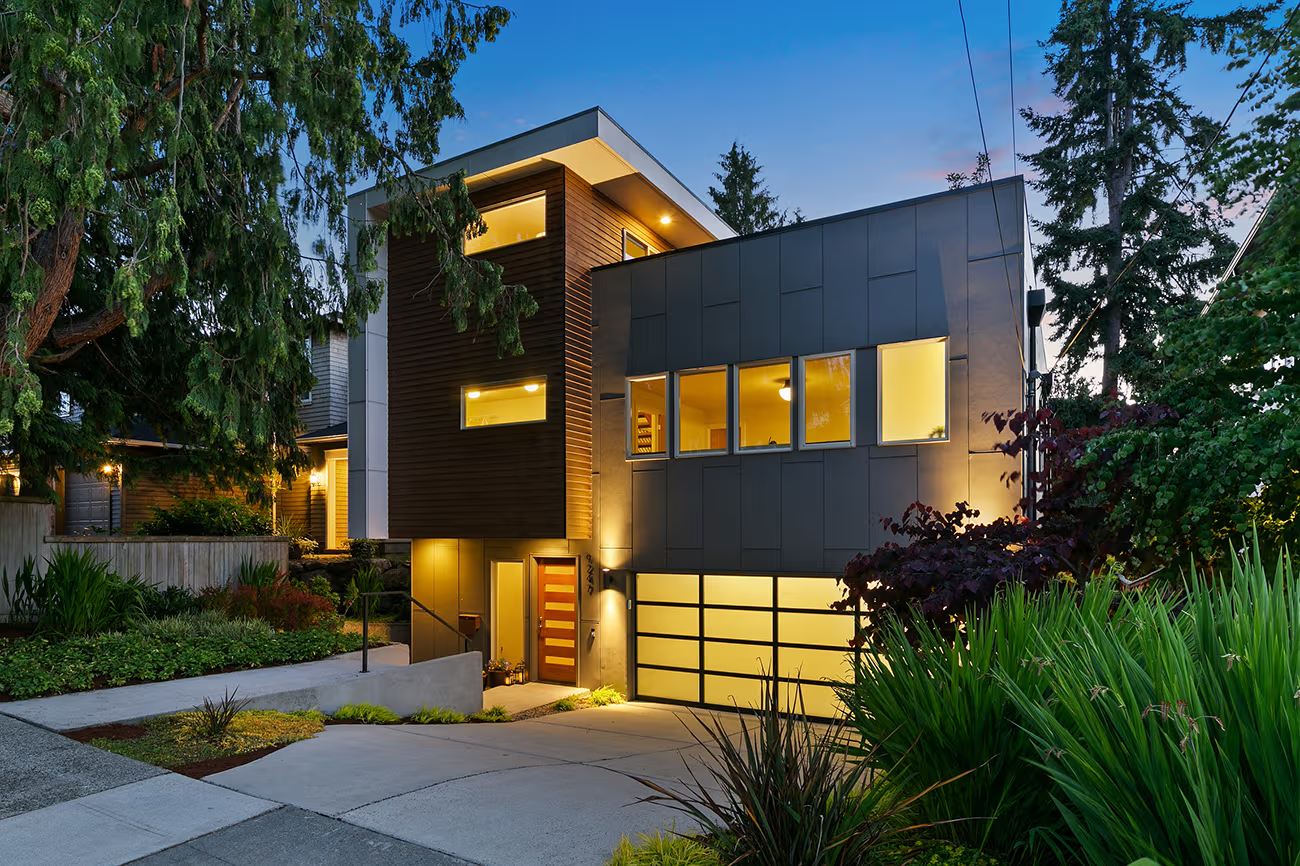
Real rooms have uneven light. One side is brighter. Corners fall off. Some areas feel softer. When everything is evenly lit, the room stops feeling like a place and starts feeling like a rendering.
I’ve learned to leave shadows alone — or at least not kill them completely. Shadows give rooms weight. They make walls feel solid. They give furniture texture.
Brightening everything might look clean, but it removes the feeling of being inside the space.
Windows Don’t Need to Be Perfect — They Need to Be Believable
This is where most photos lose trust.
Perfect interior exposure with crystal-clear outdoor views looks impressive, but it doesn’t feel honest. In real life, windows are usually brighter than the room. Sometimes you can see outside clearly. Sometimes you can’t.
Natural editing respects that imbalance.
If every window looks like a postcard, buyers stop believing the room.
If the window feels like a window, the room feels real.
Color Is About Memory, Not Style
Color correction taught me patience.
At first, I chased “clean whites.” Later, I realized white walls don’t look the same in every house. Some are warm. Some are cool. Some sit between.
When you force every wall to the same tone, you erase character.
Natural color work isn’t dramatic. It’s subtle enough that no one notices it — but wrong enough that everyone notices when it’s missing.
If wood looks like wood, fabric looks like fabric, and whites don’t glow unnaturally, you’re doing it right.
Straight Lines Make People Feel Comfortable
People don’t consciously notice vertical lines — but they feel them.
When walls lean, rooms feel uneasy. When floors tilt, something feels off. Perspective correction isn’t a technical step; it’s a psychological one.
When lines are straight, buyers relax.
When they’re not, buyers pull away without knowing why.
Natural perspective correction doesn’t stretch rooms. It simply puts things back where they belong.
Remove Distractions, Not the Truth
I’ve seen edits that looked beautiful — and dishonest.
Permanent poles removed. Structural elements erased. Outdoor clutter that’s always there magically gone. These edits don’t help listings. They create disappointment.
Over time, I learned a simple rule:
If it would still be there when someone walks in, it stays.
Cords, stains, reflections, trash — those can go.
Walls, buildings, fixed objects — those stay.
Natural photos don’t hide reality. They tidy it up.
Consistency Is What Makes a Listing Feel Trustworthy
A single photo can look natural. A full set is harder.
When every image has different brightness, contrast, and color tone, the property feels fragmented. Buyers don’t feel like they’re walking through a home — they feel like they’re jumping between edits.
Natural editing treats the entire gallery as one experience.
Same light.
Same mood.
Same restraint.
That’s what makes listings feel calm and confident.
Over-Edited Photos Don’t Age Well
This is something you only learn with time.
Trendy edits age fast. Heavy HDR. Ultra-sharp clarity. Extreme skies. They look impressive today and dated tomorrow.
Natural photos age quietly. They still look right years later because they weren’t trying to chase attention — just accuracy.
Homes don’t need drama. They need honesty.
What Buyers Actually Respond To
Buyers don’t say, “These photos are naturally edited.”
They say:
• “This feels comfortable.”
• “This looks livable.”
• “This feels like a real home.”
That emotional response doesn’t come from perfection. It comes from restraint.
Final Thought From Experience
Natural real estate photos don’t sell a dream.
They sell confidence.
Confidence that what you see is what you’ll get.
Confidence that the agent isn’t hiding anything.
Confidence that the home deserves attention without exaggeration.
After years of editing, one truth remains:
The best compliment is when no one talks about the photos — because they’re too busy talking about the house.
FAQ
What does “natural” really mean in real estate photo editing?
Natural means the photo feels honest when someone walks into the property. The lighting, colors, and space should match real life as closely as possible. If buyers feel the home looks different in person than it did online, the photos were not natural—even if they looked impressive.
Can photos be edited and still look realistic?
Yes, absolutely. In fact, editing is necessary to make photos look realistic. Cameras often capture rooms darker, flatter, or more distorted than the human eye sees. Editing corrects those camera limitations without changing the actual structure or feel of the home.
How do I know if my photos are over-edited?
A simple test:
If the room looks brighter, larger, or more dramatic than it feels in person, the edit went too far. Over-edited photos often have glowing walls, perfectly clear windows, unnatural skies, or zero shadows—things that don’t exist in real life.
Is HDR editing considered natural?
HDR can look natural if done carefully. When HDR is overused, photos appear flat or artificial. A natural HDR edit balances indoor light while keeping shadows and contrast intact, so the space still feels real and dimensional.
Should shadows be removed from real estate photos?
No. Shadows are part of how we experience space. Removing all shadows makes rooms look flat and unrealistic. The goal is to soften harsh shadows, not erase them completely.
Why do natural photos perform better with buyers?
Because they build trust. Buyers make emotional decisions quickly. When photos feel honest, buyers feel confident. When photos feel exaggerated, buyers become skeptical—even if they can’t explain why.
Can natural editing still make a property look attractive?
Yes. Natural does not mean dull or boring. It means clean, bright, balanced, and inviting—without exaggeration. Homes can look beautiful without looking fake.
What’s the biggest mistake people make when editing real estate photos?
Trying to impress instead of trying to represent. Brightness, clarity, and color should support the home—not overpower it. Editing should never distract from the property itself.
Do agents prefer natural photos or dramatic photos?
Experienced agents prefer natural photos because they reduce buyer disappointment and wasted showings. Dramatic photos may get clicks, but natural photos bring serious buyers through the door.
How does natural editing affect in-person showings?
When photos are natural, buyers walk in feeling familiar with the space. That comfort increases interest and shortens decision time. When photos are misleading, buyers feel disconnected and less confident.
Is natural editing better for long-term branding?
Yes. Agents who consistently use natural, honest photos build a reputation for transparency and professionalism. Over time, clients trust listings that feel real rather than overly polished.
Can natural photos still work for luxury properties?
Absolutely. Luxury homes benefit even more from natural editing. High-end buyers expect authenticity, accurate materials, and realistic lighting. Over-editing luxury spaces often reduces their perceived value.